Improve Your Child's Spiral in Figure Skating
Youth Figure Skating, Child Skating, Skating Performance
Why Your Skater's Spiral Feels Different On Ice
If your daughter has been working on her spiral for months and it still isn't showing up the way you both hoped in competition, in program run-throughs, or even just consistently in practice, you're not missing something obvious. This is one of the most common frustrations skating families bring to me.
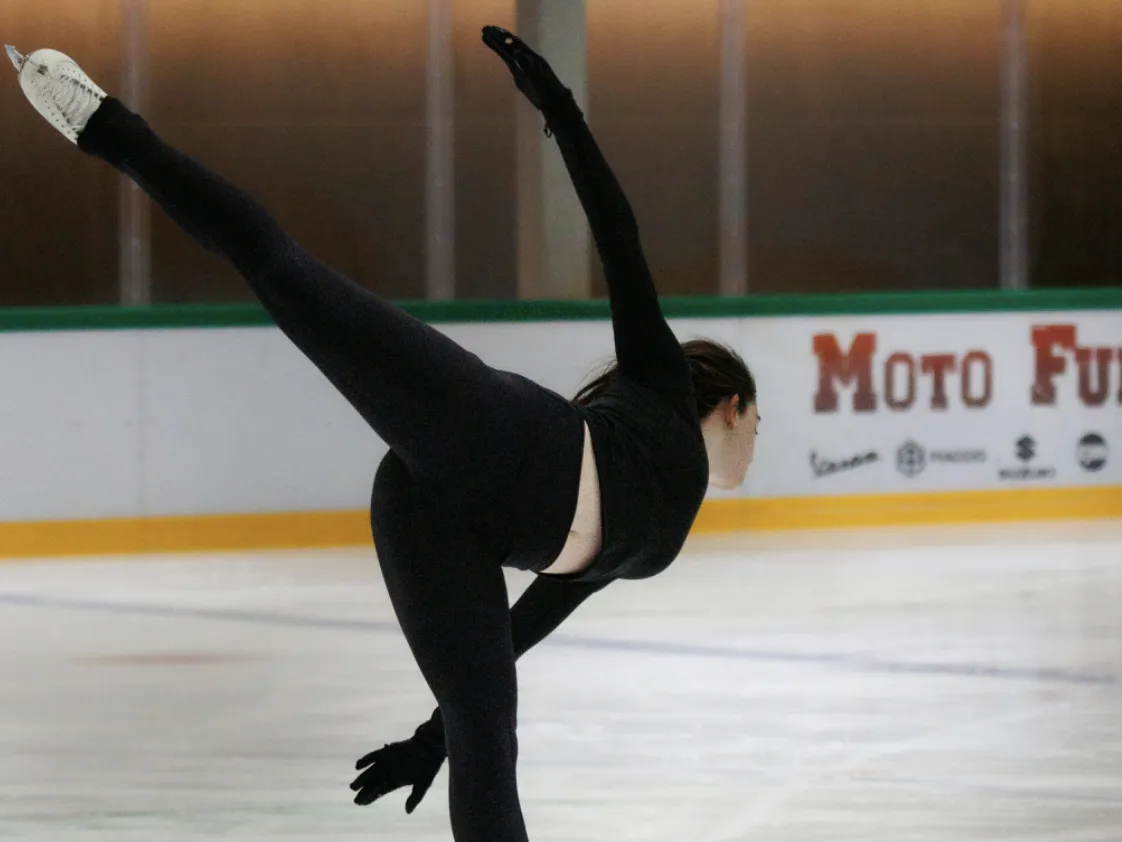
The spiral looks simple from the boards. One leg up, arms out, hold it. But the position is actually asking a lot of the body all at once, single leg stability, hip mobility, rib cage control, and visual focus, all working together in a moving environment. When any one of those pieces is undertrained, the spiral suffers.
Here's what's usually going on and what you can do about it.
She may not have enough single leg strength yet
The spiral requires her to hold her entire body weight on one leg while extending the other behind her. If that standing leg isn't strong enough to stay quiet under that load, her body will compensate, dropping the hip, shifting the torso, or shortening the position just to find balance.
Off-ice single leg training, done slowly and with control, builds the foundation the spiral needs. This isn't about doing more lunges. It's about teaching the standing leg to stay stable while everything else moves.
Hip mobility and rib cage rotation work together
Height in the spiral doesn't only come from how flexible her hip is. It comes from her hip and rib cage working together. If her ribs aren't rotating, her hip can only go so far before the position collapses.
When these are trained together, not separately, you start to see real change in the position.
Her visual system matters more than most people realize
This one surprises skating families. Your daughter's eyes directly affect her balance on one leg. Simple eye tracking drills before practice, slow, controlled movements, prime the connection between her visual system and her body's ability to stay stable on the ice.
It takes two minutes and it changes how her body shows up in the session.
Why off-ice work doesn't always transfer
If she's doing all of this and still losing the spiral on the ice, the issue is usually that the off-ice work hasn't connected to skating-specific conditions yet. The brain needs to practice the skill in context. That means deliberate spiral training on the ice, not just running it in programs and hoping it appears.
The work transfers when it's specific and patient. General fitness alone doesn't always get there.
💡 Parent Insight: If you want to know exactly where your skater's gaps are, that's what the strength assessment is for. It shows you specifically what needs attention so you're not guessing.
Jena Hansen-Honeycutt, DAT, LAT, ATC is a dance medicine athletic trainer and clinical educator and founder of The Skilled Collection. She works with dancers, cheerleaders, figure skaters, and hypermobile athletes, and the clinicians who care for them.
© 2026 ThriveWell Consulting LLC. This post is for educational purposes and is not a substitute for medical advice.

