
FOR DANCE PARENTS WHO WANT TO HELP WITHOUT ADDING MORE TO AN ALREADY FULL PLATE
She's in the studio five days a week. Her extension still won't go where she wants it to.
More rehearsal won't fix it. More stretching might make it worse. Here's what actually builds a stronger dancer.
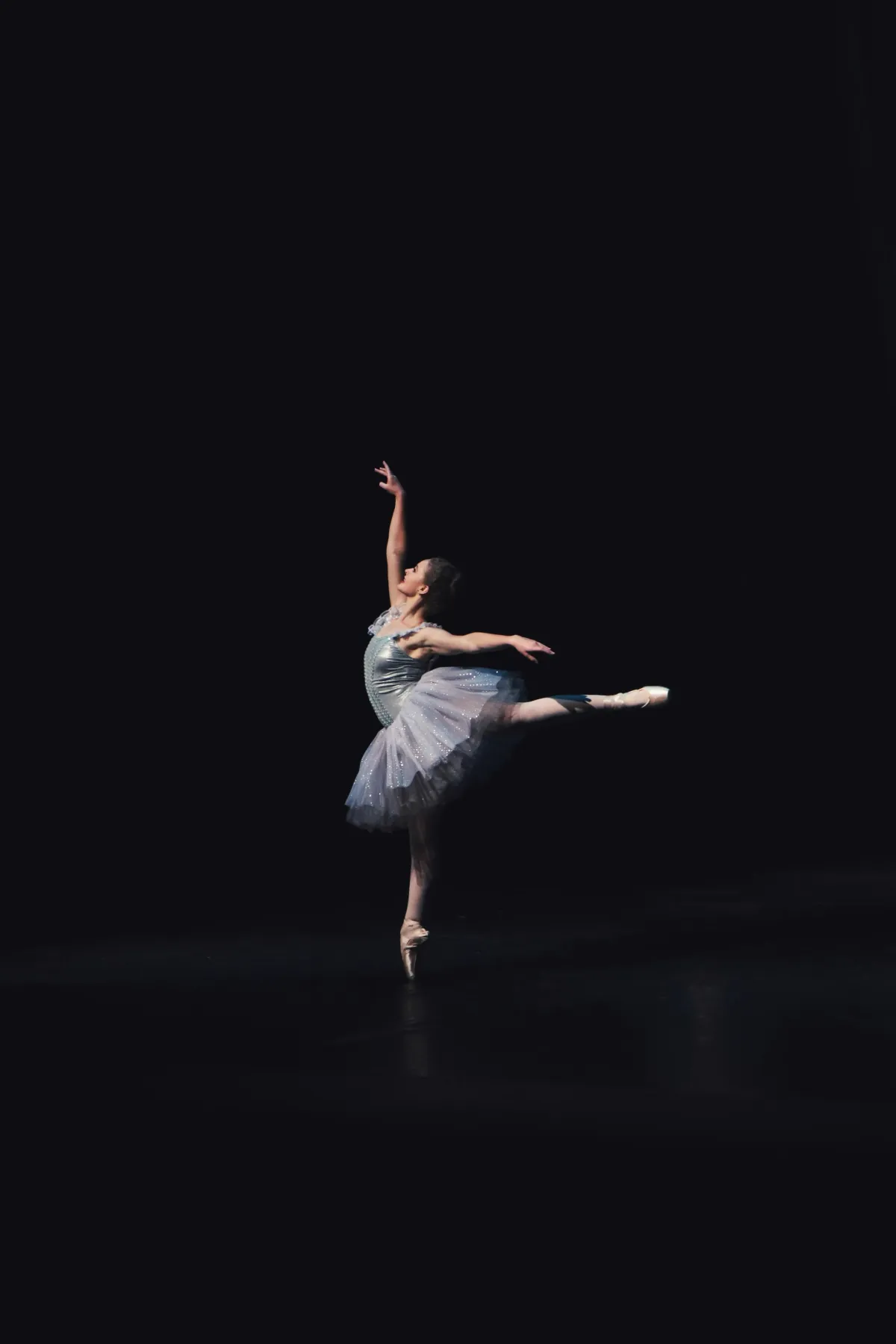
Here's something most families don't know
- The American Academy of Pediatrics has a guideline: kids shouldn't train more hours per week than their age in years.
- A 9-year-old has a ceiling of 9 hours — that's class, rehearsal, and conditioning combined.
- Most competitive dancers are already there.
- So when her teacher says she needs more strength, more flexibility, more core, they're right.
- She does. But the answer isn't more hours.
- It's the right 15 minutes.
- That's what these programs are built around.
THE REAL PROBLEM
Dance class builds dance skill. It doesn't build strength.
A 10-year-old spending 8 hours a week in the studio is getting better at dance. She is not getting stronger in the ways that actually matter for extension and control — hip stability, core sequencing, single-leg power, control under load.
But most programs get this wrong. They add volume — an hour of extra conditioning on top of a full rehearsal week.
Adult gym movements scaled for smaller bodies. More stretching on top of stretching that isn't working.
A child sitting in school for 6 hours and in the studio for 8 hours a week is not undertrained. She is undertrained in specific ways. And random volume doesn't fix specific problems.
THE AAP GUIDELINE — Kids shouldn't train more hours per week than their age in years. Most competitive dancers are already there.
THE ACTUAL FIX — 15 minutes, 3-5 times a week, targeting exactly what extension and turnout require. Not more. The right thing.
WHAT IT LOOKS LIKE AT THE BARRE AND ON THE FLOOR — Hip stability. Core sequencing. Single-leg power. The foundation for every extension and every turn she's working toward.
The restriction isn't in the tissue. It's in the signal.
Her teacher mentioned flexibility again. You added the stretching. Nothing changed.
That's not a discipline problem. That's a mechanism problem.
The body doesn't restrict flexibility because muscles are too tight. It restricts flexibility because the brain doesn't feel stable enough to allow more range. When her brain senses instability at the hip, knee, or core, it tightens the surrounding tissues as a protective response.
Pushing into that resistance doesn't release it. It confirms the threat signal. The fix isn't force. It's giving the nervous system a reason to feel safe.
Once it does, range opens. Sometimes within a single session.
That's the foundation every program here is built on.
MEET THE FOUNDER & CEO
Welcome, I'm Jena!
I'm Jena Hansen-Honeycutt, Doctor of Athletic Training.
I've spent 15 years inside university dance programs and working in performing arts, treating the overuse injuries, talking to the teachers and coaches, watching what actually moves the needle for performers.
I'm also a published researcher on breathing pattern disorders in physically active athletes.
That work directly shapes how I think about why young dancers plateau and why the usual interventions don't hold.
These programs aren't a gym routine with dance photos on it. They're built from the ground up for how a developing athlete's body actually works, and for the parent who wants to support that without guessing.

We Help Dance Families Go From...
Parents come here saying:
"Her teacher keeps mentioning the same things and I don't know what to do at home."
"She stretches every day. I don't see any difference in her extension."
"I want to help but I don't want to push her past what's healthy."
"She's hard on herself after bad rehearsals. The last thing I want to do is add pressure."
What changes: Her extension holds instead of shaking. Her turns stop wobbling because her body knows where center is.
You stop adding things that don't work. You have one specific, short routine that does.
Her teacher notices. That moment is real.
Dance Movement Assessment Kit
Dance Movement Assessment Kit
Before you can close the gap, you need to see it clearly. This kit walks you through a simple assessment you can do at home, no clinic, no waitlist. You'll know exactly where your dancer's movement patterns are breaking down and which programs are the right next step. Includes a follow-along assessment video, movement guide, tracker, and a one-page sheet you can bring to her teacher.
Dance Sleep Kit for Families
Most families are optimizing everything except the one hour that determines whether all the other hours land. Sleep is when the nervous system consolidates what it practiced. When it's disrupted, flexibility, reaction time, and mood all suffer — and it looks like a motivation problem. This kit resets the routine in one week.
Dance Strength Foundations (10-Week Program) — $99
The full foundation program for dancers ages 7-13. 15-minute sessions, three times a week. Progressive structure that moves from stability to strength to power, in that order, because order matters. Every session is guided video. Every week has a tracker. This is not an add-on to a full training week. It's the specific work that makes everything else more effective. 3-5 sessions. 45 minutes total. That's it. Includes 10 weeks of guided sessions, weekly trackers, and parent guides.
Private Sessions with Jena
If your dancer has a specific concern, a plateau nobody has explained, something the teacher keeps flagging — a private session is the fastest path to an actual plan.
You'll leave with specific, clinically informed next steps. Not general advice.
Who This Is For
Parents of dancers ages 7-13 who:
- Know their dancer needs to be stronger but don't know what that actually looks like at home
- Are tired of adding things that don't move the needle
- Want a short, specific routine, not another hour on top of a full week
- Trust the nervous system approach and want to see it in action
This is not for parents looking to maximize training volume.
More hours will not fix what these programs address. The right 15 minutes will.

FAQs
Find Answers to Enhance Your Dance Journey
Can my dancer do this alone?
All of the exercises can be done independently, but younger dancers may benefit from light parent involvement (especially for setup).
What if my dancer already works out?
This program fills in the foundational gaps many routines miss, improving form, balance, and injury prevention.
What if I'm not sure where to start?
Start with the $17 5-Day Flexibility Challenge — it's designed to give your child back their flexibility and build skills to maintain it.
What equipment is needed?
No equipment is needed for the 5-day flexibility challenge. For the 10-week strength program, just a resistance band, foam roller or ball, and optional items like a pillow and chair.
Is this for coaches or parents?
It's designed specifically for parents of 7–13 year old dancers — no prior experience needed.
Where do I start?
The 5-Day Flexibility Challenge. It's $17 and it will tell you more about what is actually limiting your dancer than months of unstructured stretching.
She doesn't need more hours. She needs the right ones.
The 5-Day Flexibility Challenge is 10 minutes a day for five days.
Contact Us on Social Media!
© 2025 ThriveWell Consulting LLC
The information provided on this website, including but not limited to written content, videos, audio recordings, classes, and courses related to movement, exercise, meditation, and self-development, is intended for educational and informational purposes only.
This content is not intended to be a substitute for professional medical advice, diagnosis, or treatment. Always seek the advice of your physician or other qualified health provider with any questions you may have regarding a medical condition, mental health concern, or before beginning any new exercise, wellness, or meditation program.
By engaging with the content on this site, you acknowledge and agree that you are doing so voluntarily and at your own risk. Neither the website owner, instructors, nor any affiliated parties shall be held liable for any injury, health issue, or other consequences that may result from following the exercises or practices provided.
If you experience any pain, dizziness, shortness of breath, or any other concerning symptoms, stop immediately and consult a healthcare professional.
If any provision of this Agreement is held invalid and unenforceable, all remaining portions shall nevertheless remain valid and enforceable to the extent they can be given effect without the invalid portion.